
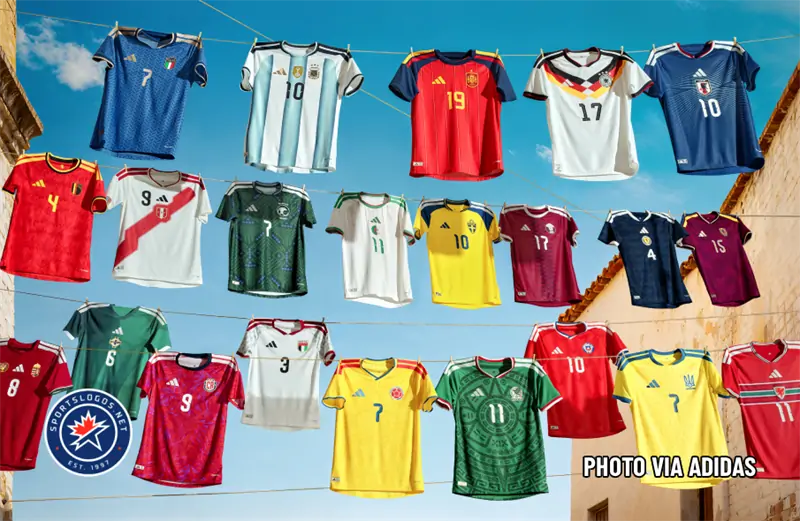
Bulk buying national team jerseys for World Cup 2026 is not just about finding a low unit price. Buyers need to get four things right at the same time: MOQ, size breakdown, patch options, and delivery timing. That matters even more for this tournament because the 2026 FIFA World Cup will run from June 11 to July 19, 2026, across Canada, Mexico, and the United States, with an expanded field of 48 teams and 104 matches. In simple terms, demand will be broader, styles will move faster, and late buying will create more risk than usual.
If you are sourcing for retail, club resale, event sales, fan groups, or a wholesale jersey store, the smart approach is to treat jersey buying as a planning job, not just a product order. This guide breaks down the real questions buyers ask before placing a bulk order and explains how to reduce mistakes on MOQ, sizes, patches, and shipping.
World Cup buying is different from normal football inventory. During a major tournament, demand is more emotional, more country-driven, and more time-sensitive. Buyers do not only ask for “a jersey.” They ask for specific national teams, specific sizes, specific badge combinations, and delivery before a match cycle or before the tournament opens. Because World Cup 2026 is the first men’s World Cup with 48 teams and will be played in 16 host cities, the range of teams and fan demand is wider than in previous tournaments.
That changes how bulk buyers should think. Instead of ordering one large block of generic stock, it is usually better to build a more flexible buy plan:
This approach lowers inventory risk and improves sell-through.
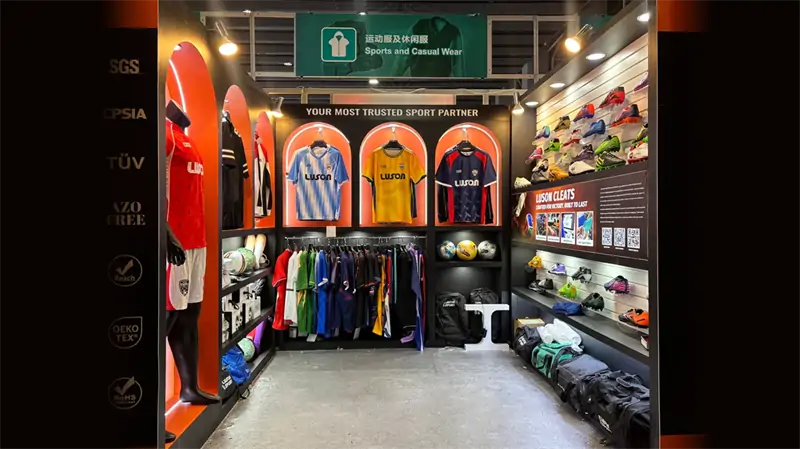
MOQ is one of the first things buyers ask about, but many new buyers focus on the wrong number. The real question is not “What is the MOQ?” but “How is the MOQ counted?”
In jersey wholesale, MOQ can be structured in several ways:
That is why two suppliers can both say they offer a low MOQ, while the actual buying flexibility is very different.
Instead of asking only for a single MOQ figure, ask these questions:
That gives you a clearer commercial picture.
For a first World Cup order, it is usually smarter to:
That reduces pressure on both cash flow and storage.
Not every national team should be bought at the same depth. A strong bulk strategy normally uses three layers.
These are the teams that usually move fastest across many markets. Core teams often deserve:
These teams can sell very well, but demand is usually more market-specific. They are useful for:
These are the teams that may not generate the highest volume, but they can still be worth listing for search traffic, wholesale assortment depth, and loyal supporter demand.
For World Cup cycles, this layered model works better than trying to stock every team at the same level.
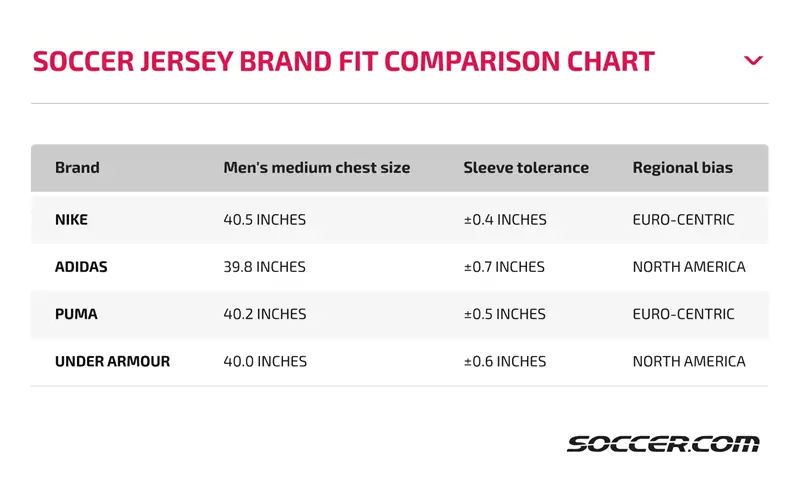
Size planning is one of the most underestimated parts of wholesale jersey buying. Many buyers order by label only: S, M, L, XL. That is risky, because size labels are not perfectly consistent across manufacturers. Official size guides already show why. For example, Adidas lists a men’s L tops size at roughly 39.5–42.5 inches chest, while Nike’s men’s L tops size is roughly 41–44 inches chest. That difference is big enough to affect returns, customer satisfaction, and resale confidence.
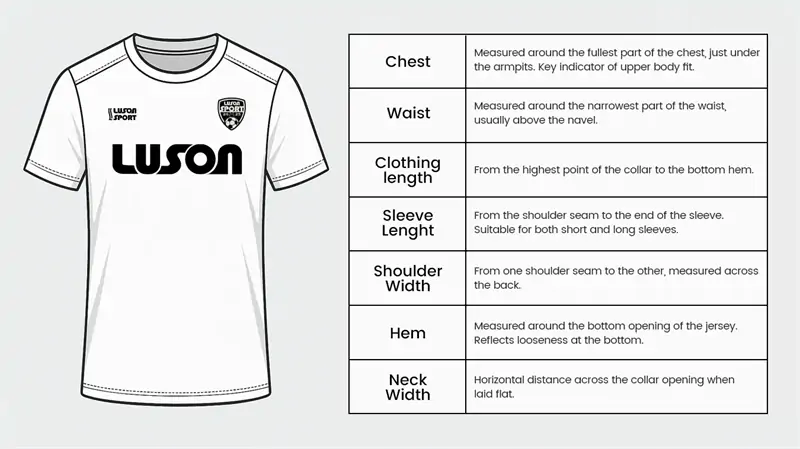
For bulk buying, do not approve production based only on S-XXL labels. Ask for:
That is especially important if you buy from different factories or mix fan version and player version styles.
A smarter size plan starts with the market you actually serve.
Focus on balanced adult runs, but do not overload the smallest and largest sizes unless your historical sales justify it.
Request broader mid-size coverage and ask whether mixed packs are possible.
Measurement accuracy matters even more, because poor size consistency creates higher return risk.
Some buyers focus only on men’s unisex sizing and miss extra demand. If your market includes families or supporter gifts, youth and women-oriented cuts can make the order more complete.

Patches are one of the biggest causes of confusion in World Cup jersey sourcing. Buyers often use the word “patch” broadly, but there are several categories:
These are not the same product.
FIFA states that it protects its logos, words, titles, symbols, and other brand assets and allows their use under licence. FIFA’s official store also sells official World Cup 2026 merchandise through licensed channels. That means buyers should not assume that every “World Cup 2026 patch” sold in the market is official or licensed. If patch legitimacy matters for your store, ask the supplier very clearly whether the patch is official, licensed, or simply tournament-style aftermarket decoration.
Ask these questions before paying for patched stock:
These questions sound basic, but they prevent many disputes later.
Patches are usually worth adding when:
Patches are less attractive when the goal is simple low-cost fan stock.
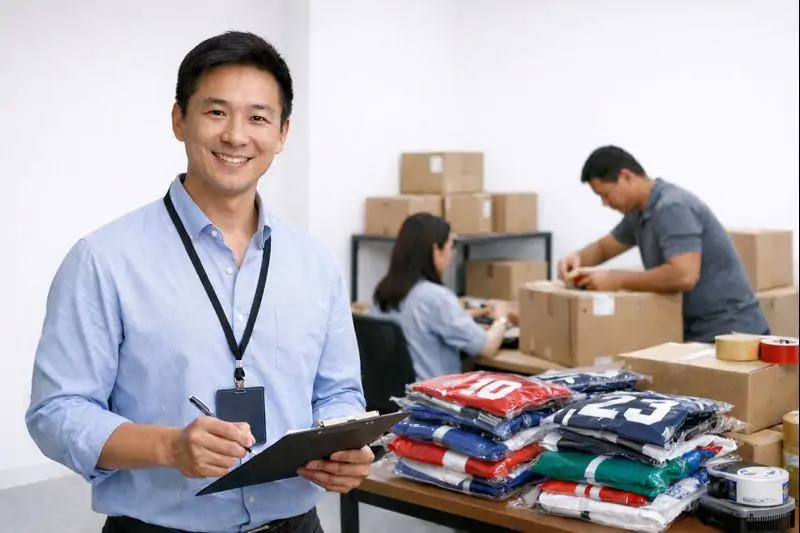
Delivery is not just courier transit time. In wholesale jersey buying, total lead time usually includes:
That is why buyers who order “just in time” often end up late.
For international shipping, customs delays often come from inaccurate or incomplete documents. DHL and UPS both emphasize that customs clearance depends heavily on accurate commercial invoices, proper product descriptions, and complete shipping data. DHL notes that missing or incomplete customs information can delay or hold shipments, and UPS likewise warns that incorrect or missing documentation is a common cause of customs problems.
Before your supplier ships, confirm:
This is boring paperwork, but it protects your delivery schedule.
Because the tournament starts on June 11, 2026, buyers should work backward from their sales window, not from the supplier’s production promise. If you need inventory for pre-tournament campaigns, group-stage demand, or fan events, your buffer needs to cover both production and customs risk. The closer you buy to the tournament, the less margin you have for stock corrections, size rebalancing, or delayed patch application.
Here is a simple structure that works well for many buyers.
Start with:
The goal here is speed and control.
After your core buy is secure, layer in:
This keeps your first cash outlay safer.
Do not stop at “supplier shipped it.” Track:
In tournament selling, inventory that arrives late often behaves like dead stock.
A famous team can still become a bad buy if the size run is wrong or delivery misses the demand window.
As official Adidas and Nike size guides show, an “L” is not universal across brands. Buy by measurements, not by label confidence.
FIFA protects its tournament marks and official products are licensed. If patch status matters, verify it before you pay.
Transit is only one part of delivery. Documentation and customs can still slow the order.
The first order should teach you what sells. It should not lock you into too much slow stock.
Before placing a bulk order, ask for all of this in writing:
A supplier that can answer these clearly is easier to scale with.
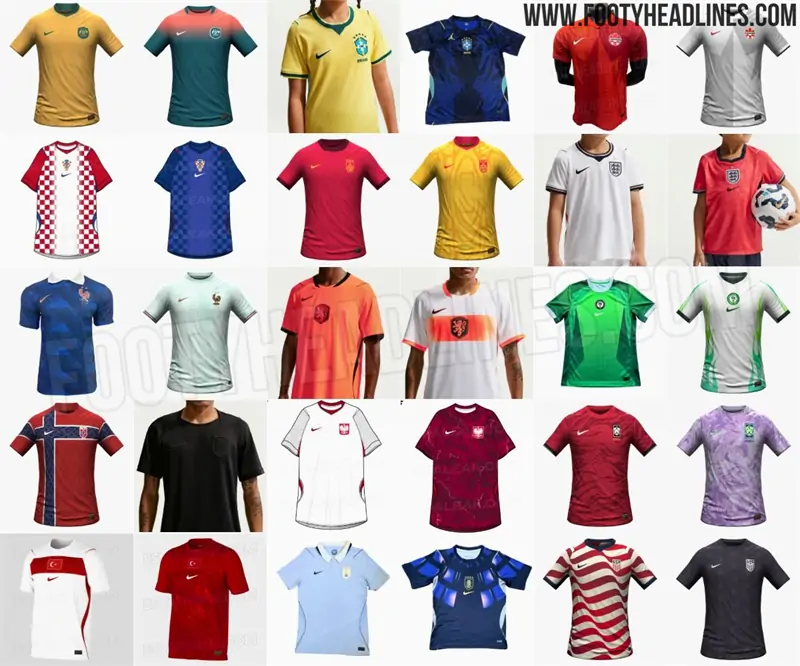
Bulk buying national team jerseys for World Cup 2026 is not mainly a price game. The best buyers win by managing MOQ flexibility, accurate sizing, patch clarity, and delivery timing better than competitors. World Cup 2026 will be the biggest men’s World Cup yet, with 48 teams, 104 matches, and a June 11 to July 19 tournament window across three host countries, so planning mistakes will be more expensive than usual.
The safest strategy is simple:
Do that well, and your bulk order becomes much easier to sell.
There is no single best MOQ. The better answer is to choose the smallest order structure that still gives you a useful size mix and reorder flexibility.
Usually only for your strongest teams or premium listings. Start with core stock first, then add patched versions where demand justifies it.
Because brand size labels are not identical. Official Adidas and Nike size guides already show that the same label can map to different chest measurements.
Use complete paperwork, confirm invoice details carefully, and leave buffer time for customs clearance. DHL and UPS both stress document accuracy as a key part of avoiding delays.
No. FIFA protects its tournament brand assets and official merchandise is licensed, so buyers should verify whether patches are official licensed items or aftermarket add-ons.
Read more:
How to Choose Premiership Football Jerseys? Complete Guide to Sizes,Fits & Team Styles
2026 Premier League Kit Rankings: The Best, The Bad, and The Ugly
Which Are the 10 Best Retro Premier League Kits Every Fan Needs in 2026?